
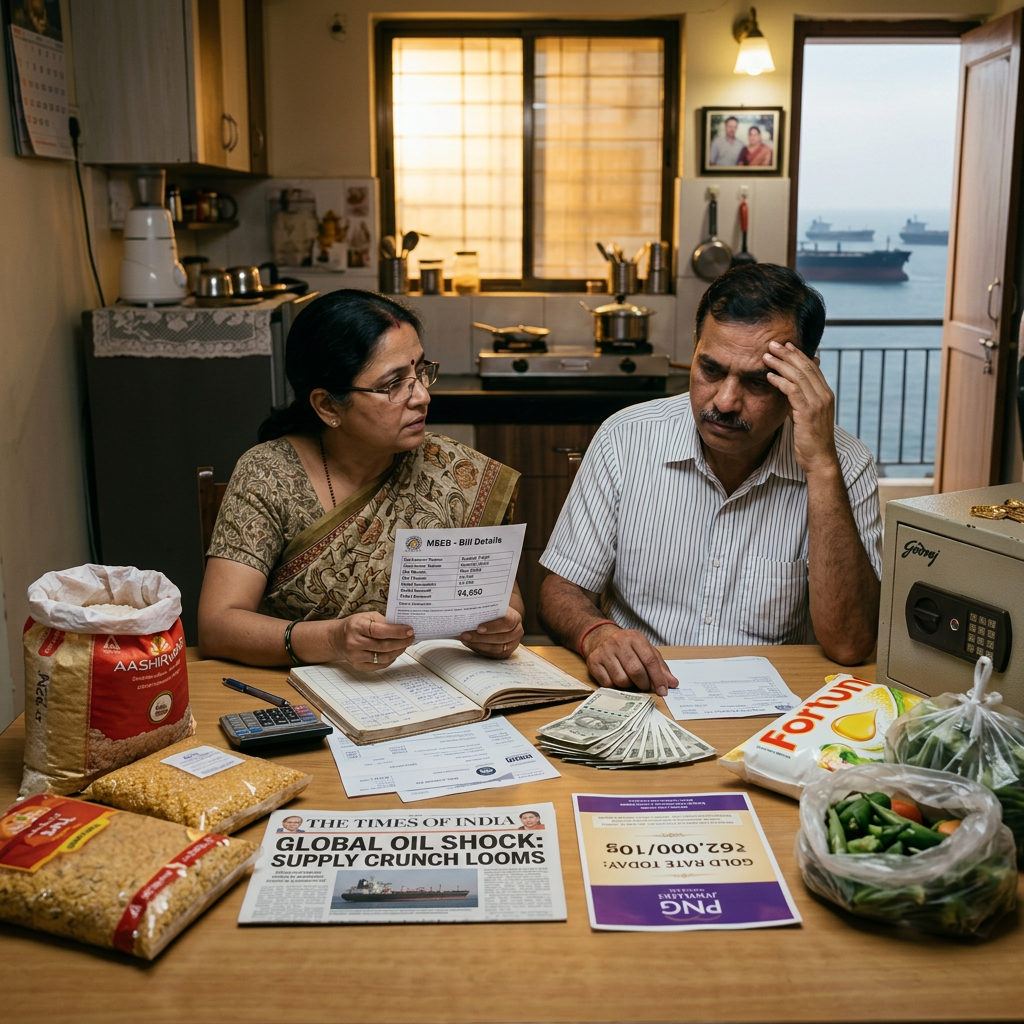
For the last few years, inflation conversations in India largely revolved around food prices. Vegetables, pulses, edible oils, and monsoon-linked disruptions usually dominated headlines. However, a different inflation cycle is now beginning to emerge. The Iran conflict and the resulting energy shock are pushing fuel and industrial costs sharply higher across the economy. As a result, India may be entering a more complex inflation phase where energy prices start influencing everything, from transport and manufacturing to household spending and growth itself.

Breakdown:
India’s wholesale inflation surged unexpectedly to 8.3 percent in April, marking the fastest pace in nearly three-and-a-half years. The spike came largely from rising fuel and energy costs linked to the ongoing Middle East conflict and disruptions around the Strait of Hormuz. Wholesale fuel and power prices jumped nearly 25 percent year-on-year, while petroleum and natural gas prices surged over 67 percent.
Although wholesale inflation itself is not directly targeted by the Reserve Bank of India, economists closely monitor it because these costs eventually flow into retail prices with a lag. Fuel sits at the center of modern economic activity. When diesel, petrol, gas, and logistics costs rise, the impact gradually spreads across transport, manufacturing, agriculture, food delivery, aviation, and consumer goods. Early signs of that transmission are already visible, with milk prices also rising by around ₹3 per litre in several markets. Consequently, what begins as an energy shock can slowly evolve into broader inflation across the economy.
The government has already started responding. India raised retail petrol and diesel prices for the first time in four years after state-run fuel retailers absorbed mounting losses for months. At the same time, policymakers introduced fuel conservation and austerity measures. These include encouraging work-from-home arrangements, restricting travel, and reducing operational spending across government systems.
This reflects how seriously policymakers are viewing the situation. India remains one of the world’s largest energy importers, and the Strait of Hormuz handles roughly a fifth of global oil shipments during normal conditions. Any prolonged disruption creates direct pressure on India’s import bill, foreign exchange reserves, inflation outlook, and fiscal stability. Even after crude prices pulled back slightly from their recent peaks above $120 per barrel, the system-wide impact remains significant.
At the same time, the inflation story is now extending beyond fuel. Gold prices and imports are also reacting sharply. India recently raised import duties on gold and silver from 6 percent to 15 percent. As a result, domestic demand slowed sharply and discounts hit record levels. Meanwhile, gold has become comparatively cheaper in the UAE. This could revive the long-standing trend of Indians purchasing gold through Dubai travel.
This creates an unusual contradiction inside the economy. On one side, rising fuel costs and inflation pressures are encouraging austerity and reduced consumption. On the other, high domestic duties may push more discretionary spending and gold demand outside India itself. The broader result is an economy increasingly shaped by global geopolitical events rather than purely domestic conditions.
The RBI now faces a difficult balancing act. Retail inflation still remains within its tolerance band for now, but continued fuel and food cost increases could force policymakers to reconsider future rate decisions. Higher interest rates may help contain inflation, but they could also slow consumption and economic growth at a time when global uncertainty is already rising.
Why this matters:
India’s inflation cycle is becoming more externally driven. Earlier inflation spikes often came from domestic supply disruptions or food volatility. However, energy-linked inflation behaves differently because it spreads through nearly every layer of the economy. This makes inflation management far more difficult and forces governments to balance growth, consumption, imports, and fiscal stability simultaneously.
The Big Picture:
More broadly, the Iran conflict is revealing how interconnected modern economies have become. Oil routes, shipping disruptions, commodity prices, interest rates, and household spending are all reacting together. Countries like India now operate inside a global economic system where geopolitical conflict thousands of kilometres away can directly affect fuel prices, inflation, consumption patterns, and even workplace behaviour domestically.
The Crunch:
India’s inflation problem is shifting from the kitchen to the fuel tank – and that changes the entire equation.



Leave your thoughts