
India’s Global Capability Centers were once seen as back offices. However, that perception no longer holds. Today, they are running core technology, finance, analytics, and product functions for global companies. At the same time, their scale is expanding rapidly across cities and sectors. As a result, India is no longer just supporting global operations. It is increasingly shaping them.

Breakdown:
India’s GCC ecosystem has crossed a significant milestone. The country now hosts more than 1,800 centers, spread across nearly 3,000 delivery units, employing close to 2 million professionals and generating over 60 billion dollars in annual revenue. This scale alone makes India the largest GCC hub globally. However, the more important shift is in the nature of work being done.
Earlier, these centers focused on support functions such as customer service, finance processing, and basic IT operations. Today, they are responsible for product engineering, AI development, cybersecurity, and enterprise transformation. In many cases, these centers act as second headquarters or even the largest technology hubs for global companies. This shift reflects a move from execution to ownership.
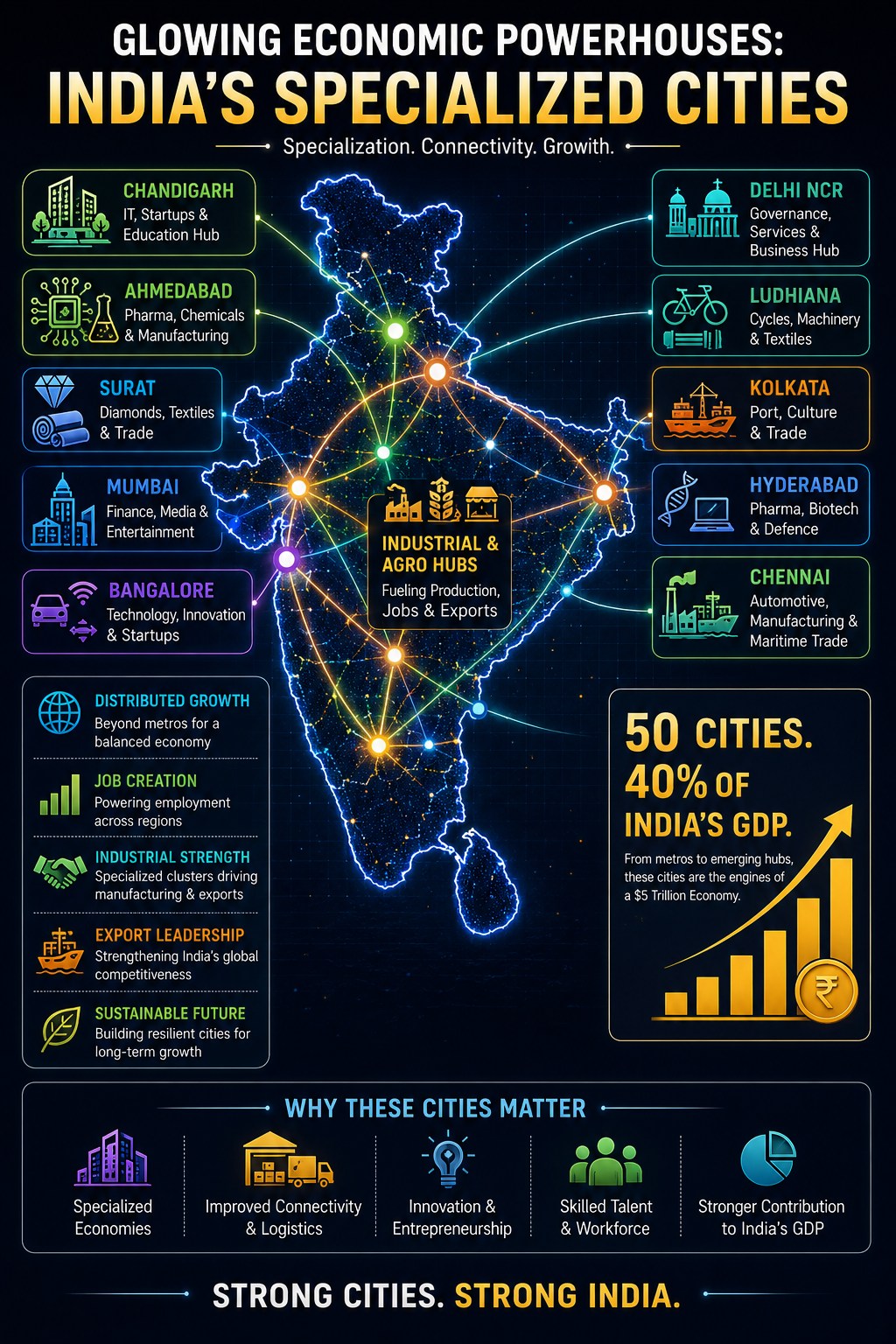
Geographically, the ecosystem remains concentrated in six major hubs. Bengaluru leads with around 40 percent of the total GCC base, driven by its deep technology talent and long history in the sector. Hyderabad has emerged as the fastest-growing hub, attracting new investments in cloud, pharma, and fintech. Cities like Pune and Chennai bring strong engineering and manufacturing linkages, while Mumbai and Delhi NCR anchor finance, consulting, and digital platforms.
At the same time, a new trend is emerging. Tier II cities are beginning to attract smaller, specialised GCCs. These “nano GCCs” focus on niche capabilities such as AI engineering, analytics, and domain-specific solutions. Lower costs, improving talent pools, and targeted state policies are driving this expansion. As a result, the GCC model is becoming more distributed and flexible.
Looking ahead, growth is expected to accelerate further. Projections suggest that India could host over 2,400 GCCs by 2030, with revenues approaching 100 billion dollars. This expansion will be driven by increasing demand for digital transformation, AI adoption, and global operational efficiency.
Why this matters:
This changes how global companies think about structure and control. Instead of outsourcing work, they are building integrated centers that own critical functions. This improves efficiency, reduces dependency on third parties, and allows better alignment with global strategy. For India, it strengthens its position as a strategic partner rather than just a service provider.
The Big Picture:
More broadly, this reflects a shift in how globalisation is evolving. The earlier model focused on cost arbitrage and outsourcing. The new model focuses on capability, ownership, and integration. India is at the center of this shift because of its talent pool, scale, and ecosystem maturity. As companies continue to decentralise operations, GCCs may become the default model for global expansion.
The Crunch:
GCCs started as support systems. They are now becoming control centres.



Leave your thoughts